

Making Charges in Gold Jewellery: What You Should Know

If you’ve ever bought gold jewellery — or even just asked for a price in a store — you’ve probably noticed something interesting. The final bill is always higher than just the gold rate. And somewhere in that breakdown, there’s a term that often creates confusion:
Making Charges
For many buyers, this is the least understood part of jewellery pricing. People focus on the gold price in India, compare rates across stores, and try to time their purchase — but rarely stop to fully understand how making charges work. And yet, in many cases, this is exactly where you either save money… or unknowingly spend more than necessary.
So what exactly are making charges?
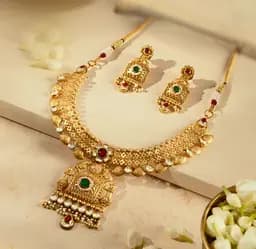
In the simplest terms, making charges are the cost of turning raw gold into a finished piece of jewellery. When you see a necklace, a bangle, or a pair of earrings, what you’re really looking at is not just gold — it’s craftsmanship. Designing, shaping, detailing, polishing — all of this takes skill, time, and effort. Making charges are what you pay for that process. So, when you buy gold jewellery, you’re not just paying for gold weight. You’re also paying for the work that goes into making it wearable and beautiful.
Why do making charges vary so much?
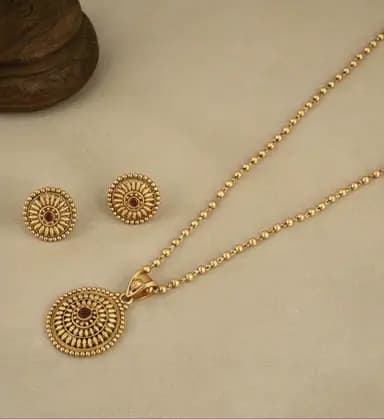
This is where things get interesting. If you visit different stores, you’ll notice that making charges are not fixed. Even within the same store, different designs may have different charges. That’s because making charges depend on several factors. Some designs are simple and require minimal work. Others involve intricate detailing, multiple layers, or fine craftsmanship, which naturally increases the cost. Machine-made jewellery usually has lower making charges, while handcrafted or designer pieces often come with higher charges. So, two pieces with the same weight can have very different final prices — simply because of how they are made.
How are making charges calculated?
Most people don’t ask this question — but they should. Making charges are usually calculated in one of two ways. In some cases, they are a percentage of the gold price. For example, 8%, 12%, or even higher, depending on the design.
In other cases, they are a fixed amount per gram. Both methods are common, but what matters is understanding how they impact your total cost.
Because sometimes, a small percentage difference can translate into a significant price difference — especially in larger purchases like bridal jewellery.
Why making charges matter more than you think
Let’s take a simple situation.
Two necklaces:
- Same weight
- Similar look
But one has higher making charges.
Most buyers assume the difference is minor.
But when you look at the final bill, the difference can be quite noticeable.
This becomes even more important when:
- You’re buying multiple pieces
- You’re planning
bridal jewellery - You’re working within a fixed budget
In such cases, making charges in gold jewellery directly affect how much value you get.
Common mistake: Ignoring making charges completely
A lot of buyers focus only on either Gold rate or Weight and assume everything else is standard.
But this can lead to:
- Overpaying
- Poor comparison between stores
- Unclear value perception
Understanding making charges gives you clarity.
It helps you ask the right questions and make more confident decisions.
Smart ways to handle making charges
You don’t need to become an expert. But a little awareness goes a long way.
Start by simply asking:
- How are making charges calculated?
- Is it percentage-based or fixed?
- Does it vary across designs?
Even these basic questions can help you understand what you’re paying for.
Another useful approach is to compare similar designs instead of just comparing total prices. This gives you a clearer picture of where your money is going.
When do making charges feel justified?
It’s important to understand that higher making charges are not always bad.
If a piece involves:
- Detailed craftsmanship
- Unique design
- Handwork
Then higher charges may be justified. In such cases, you’re paying for skill and uniqueness. But if you’re buying something simple, and the making charges seem unusually high, it’s worth questioning. The goal is not to avoid making charges completely — but to ensure they make sense.
A smarter way: Reducing making charges altogether
This is where things become interesting. Instead of constantly comparing making charges, some buyers choose a different approach — they look for ways to reduce or eliminate them.
At Chandanaz, this is exactly where our Gold Saving Schemes helps customers.
When you plan your purchase through Chandanaz’s Golden Rise or Golden Reserve, one of the biggest benefits you get is 0% making charges. This changes the entire equation.
Because now:
- You are not paying extra for making
- Your budget directly converts into jewellery value
- Your overall purchase becomes more efficient
Golden Rise allows you to build your jewellery budget gradually through monthly contributions, making it easier to manage expenses.
Golden Reserve gives you the flexibility of a one-time investment, which you can use when you’re ready.
In both cases, removing making charges significantly improves the value of your purchase.

Why this matters more in today’s market
With rising gold prices in India, every part of your purchase matters. Even small differences in cost can add up.
When you:
- Understand making charges
- Plan your purchase
- Use structured options
You move from uncertain buying to confident decision-making.
So what should you really focus on?
At the end of the day, jewellery buying is not just about finding the lowest price. It’s about understanding what you’re paying for.
Making charges are not hidden — but they are often ignored. And once you understand them, your entire approach changes. You start seeing value more clearly.
At Chandanaz, we believe that clarity builds trust.
We help customers:
- Understand pricing in simple terms
- Compare options without confusion
- Make decisions that feel right
If you’re planning to buy gold jewellery, visit your nearest Chandanaz store and explore collections with complete transparency and trust.